
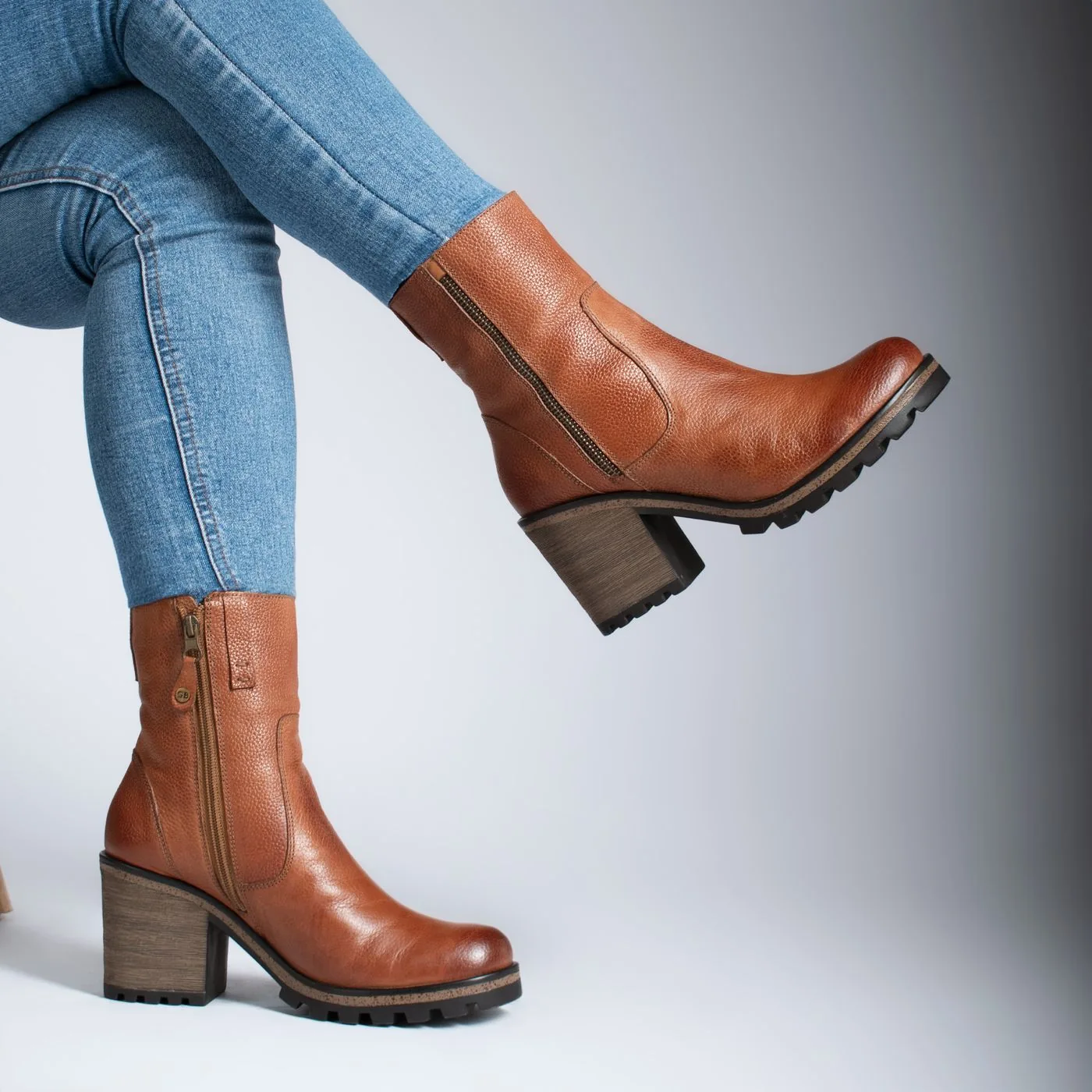
Start with the boot shaft you have
An ankle boot is not one standard shape. The shaft can be low or higher, narrow or roomy, while the toe and heel change the outline further. That is why a single rule about the correct trouser hem often becomes frustrating. Begin with the actual boot, not a generic styling diagram, and put it on with the socks you intend to wear.
Choose two bottoms from your wardrobe and compare them while standing, sitting, and walking. One may fall neatly over the boot; another may catch on its shaft. The issue is the interaction between garments, not a failure of your proportions. A small difference in hem width or length can alter the result more than switching to an entirely different boot style.
Decide whether you want overlap or a gap
A visible gap can work with a cropped trouser if that is the look and temperature you prefer. Check the gap when seated, because more leg or sock may show than it does while standing. If you prefer continuous coverage, choose a trouser that falls comfortably over the shaft. A narrower opening may get caught, so test several steps rather than smoothing it for a photograph.
For a skirt, consider whether its hem overlaps the boot or stops above it. Both can be useful. The practical question is whether the skirt catches and whether the combination suits the weather. Try the whole outfit with any tights or socks included. An online example may show bare skin in a season or climate that is not yours; adapting it is a sensible part of getting dressed, not a departure from a styling rule.
Check length with the actual heel height
If a trouser is long enough to brush the floor with one boot, it can be even less manageable with a lower shoe. Decide which footwear the trouser mainly serves before altering the hem. A tailor can explain what changes are possible and what the work will cost. Do not trim a new pair at home merely to create the exact length in a photograph, especially if the construction or return eligibility matters.
A temporary cuff can help you compare lengths if the fabric and cut allow it. It is a styling experiment, not necessarily a permanent solution. Thick fabric can create an uncomfortable or bulky cuff, while a fluid trouser may not hold it neatly. Photograph the alternatives if that helps, but spend a few minutes walking and sitting in each. Movement tells you whether the apparent solution keeps working after the mirror check.
Assess comfort separately from appearance
A boot can improve an outfit's outline and still be unsuitable for the distance you walk. Check toe room, heel movement, and the pressure of the shaft while seated. A zip should close without forcing it, and the boot should not depend on a painfully tight fit to hold your foot. Use the maker's fitting guidance and the individual product details; a familiar numerical size is only a starting point.
Nordstrom's official shoe conversion chart notes that international sizing is not standardized, so a conversion is guidance rather than a guarantee. Its shoe collection is useful for browsing, but every pair needs its own fit assessment. Everlane's trouser collection can help you compare listing-specific inseams if the gap is in your bottoms rather than your shoes. Neither purchase should be made before testing the combinations you already own.
Make the smallest useful change
Write down which pairing works and which does not. If one trouser catches on the shaft, try another leg shape before buying a new boot. If the boot feels restrictive with all your trousers, the issue may be comfort or shaft shape rather than styling. If only the hem length is wrong, consider whether an alteration is appropriate and worthwhile.
Keep the care of the boot in the plan, particularly if the day includes rain or muddy paths. Follow the material-specific guidance instead of assuming a dark boot is weatherproof. Once a combination works, it can become a reliable cold-weather formula with several tops. You do not need the supposedly perfect gap in every outfit. You need a hem that moves cleanly, a shoe that feels comfortable, and a combination suited to the day ahead.
Try the pairing before altering it
Mark a possible shorter trouser length temporarily without cutting, following a method appropriate for the fabric. Try it with the boots and with the other shoes the trousers regularly serve. If the change improves one pairing but spoils another, decide which role matters most before asking a tailor to make it permanent. A garment does not need to satisfy every shoe in the wardrobe.
What if the boot catches the trouser each time you stand? Compare another trouser opening or another existing boot. Continually pulling the fabric down is useful evidence that the pairing is inconvenient. Do not assume you need a new wardrobe because one combination behaves badly. Keep a note of the hem width, shaft shape, and overlap that worked; that practical information can guide future purchases more reliably than a prescribed number of visible inches.
Options to consider
Use these retailer collections as starting points. Check the current product description, sizing, delivery and return terms before ordering; availability and prices can change.
Sources & further reading
Official information checked October 8, 2026. This guide presents research-based editorial advice, not a claim of hands-on product testing.
- Nordstrom women’s shoes — official destination
- Everlane trousers — official destination
- Nordstrom women’s shoe conversion guidance
Illustrative stock photograph by José Martin Segura Benites: photo source. This scene does not identify our author or establish a product test.