Build around the busiest ten minutes
The difficult part of a school-run morning is often the few minutes when you are carrying a bag, looking for keys, and helping someone find a shoe. An outfit that needs a careful tuck or a delicate fastening at that moment can feel unnecessarily demanding. Start with a combination you can put on quickly and move in comfortably. It can still look like your style; usefulness does not mean abandoning preferences.
For a Saturday that includes the same early start, errands, and a park stop, straight jeans or relaxed trousers with an easy top provide a flexible base. Decide whether the day includes sitting on a low bench, carrying groceries, or spending a long time outdoors. Those details guide fabric, footwear, and the layer more reliably than a generic list of wardrobe essentials.
Make the base comfortable without losing shape
Choose a waistband you have already worn through a full morning. If jeans pull at the back when bending or pinch after sitting, another pair from your wardrobe may be better. Relaxed trousers can provide room, but a wide hem must still stay clear of the pavement. A top with enough length for reaching can simplify the outfit, especially if you prefer not to adjust it repeatedly.
An open shirt or light jacket can give the combination an intentional outline. Check that the layer's pockets are useful and that the sleeves do not interfere with your hands. A shorter jacket may work well over a longer top; a longer coat can provide coverage in cooler weather. These are options to try, not universal proportion rules. The combination should feel comfortable from more than one viewing angle and during actual movement.
Choose footwear by the route
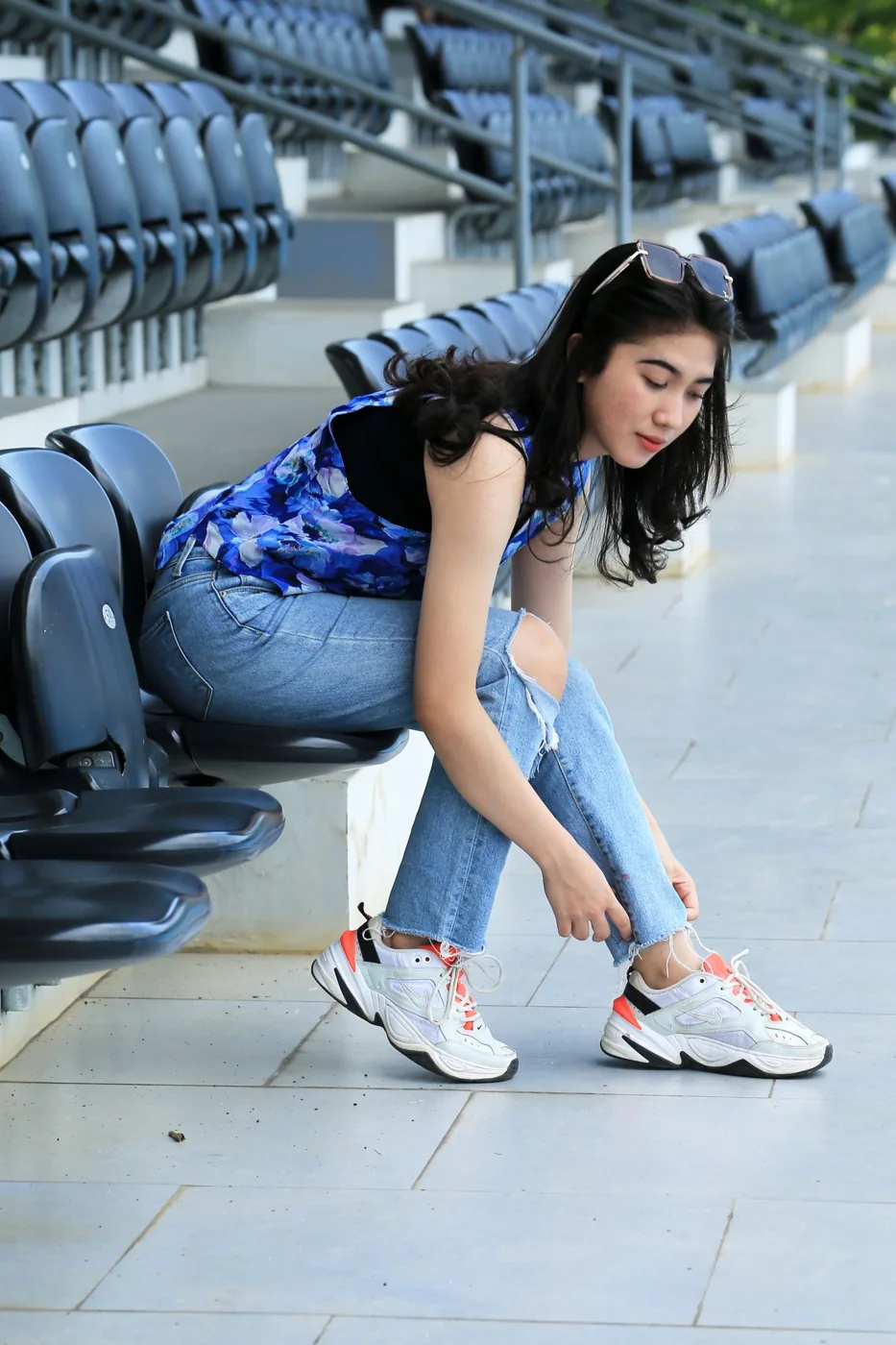
If there is a walk to the school gate and then errands, use shoes you already know are comfortable for that distance. A fresh pair bought for a casual uniform is still an untested shoe. Check heel hold, toe room, and any fastening before using it for a busy day. A shoe that slips off when you walk quickly will create work regardless of how well its color matches your trousers.
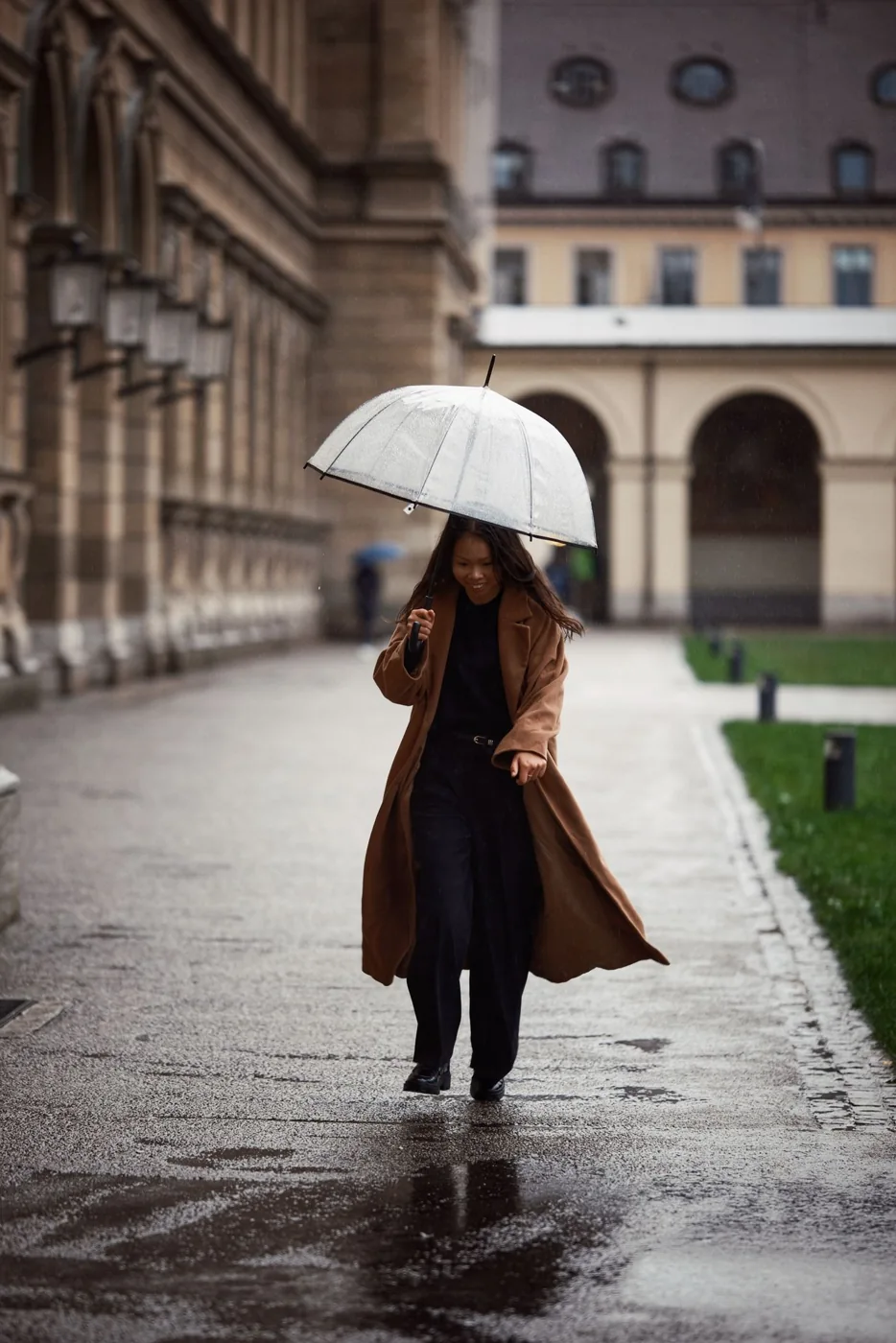
Consider socks as part of the outfit rather than an afterthought. The same shoe can feel different with a thicker or thinner pair. Keep the intended combination together when checking fit. If the weather is damp, read the shoe's care guidance and choose a suitable existing pair; a sporty appearance is not proof of water protection. Clothing should support the journey rather than depend on ideal conditions that rarely last all day.
Identify one practical purchase
Everlane's denim collection is a place to compare leg shapes, while its trouser collection offers another direction if denim is not your preference. Check individual rise, inseam, fabric, and care information rather than assuming the whole brand fits one way. UNIQLO's outerwear collection can help if your actual gap is a layer that is easier to move in. The gap should be specific enough that you can describe it in one sentence.
Try saying: the jeans I own work, but my only jacket is too restrictive over a sweater. That points toward a layer, not another pair of jeans. Or: my trousers are comfortable but drag in wet weather. That may point toward an alteration or a different existing pair before a purchase. Shopping becomes easier when you choose the problem first and the retailer second. Keep a firm total budget including any likely adjustment costs.
Keep repetition useful
Once a combination works, make two nearby versions using the same bottoms and shoes. A striped top and a plain top can change the feeling without requiring more decision-making. Store the outfit pieces where they are easy to reach. If laundry regularly makes the formula unavailable, review your wash routine and the number of genuinely useful items instead of adding unrelated pieces.
At the end of a busy morning, note what became inconvenient. Was the bag difficult to open with one hand? Did the coat feel too warm indoors? Did the waistband remain comfortable? A practical note lets you refine the next version. This is a personal uniform in the sense of a repeatable starting point, not a rule about how parents should dress. It should leave room for your taste, the day's weather, and the reality that some mornings need the simplest option available.
Set up a realistic morning test
Put on the complete outfit and gather the things you normally carry. Bend to pick up a bag, reach for a shelf, and walk around for a few minutes. Check whether the top shifts, pockets pull, or the bag strap slips. These ordinary movements are a more useful test than deciding whether a casual outfit looks polished in one standing pose.
Should the formula stay identical every day? No. Keep its useful structure and change the parts that respond to weather, laundry, or mood. A dependable pair of trousers with two comfortable tops may be enough. If your activities change, the formula should change too. Clothing for a park visit can prioritize movement differently from clothing for a school meeting later that day. Reliability comes from knowing why the combination works, not from strict repetition.
Options to consider
Use these retailer collections as starting points. Check the current product description, sizing, delivery and return terms before ordering; availability and prices can change.
Sources & further reading
Official information checked October 8, 2026. This guide presents research-based editorial advice, not a claim of hands-on product testing.
Illustrative stock photograph by Jeffry Surianto: photo source. This scene does not identify our author or establish a product test.