
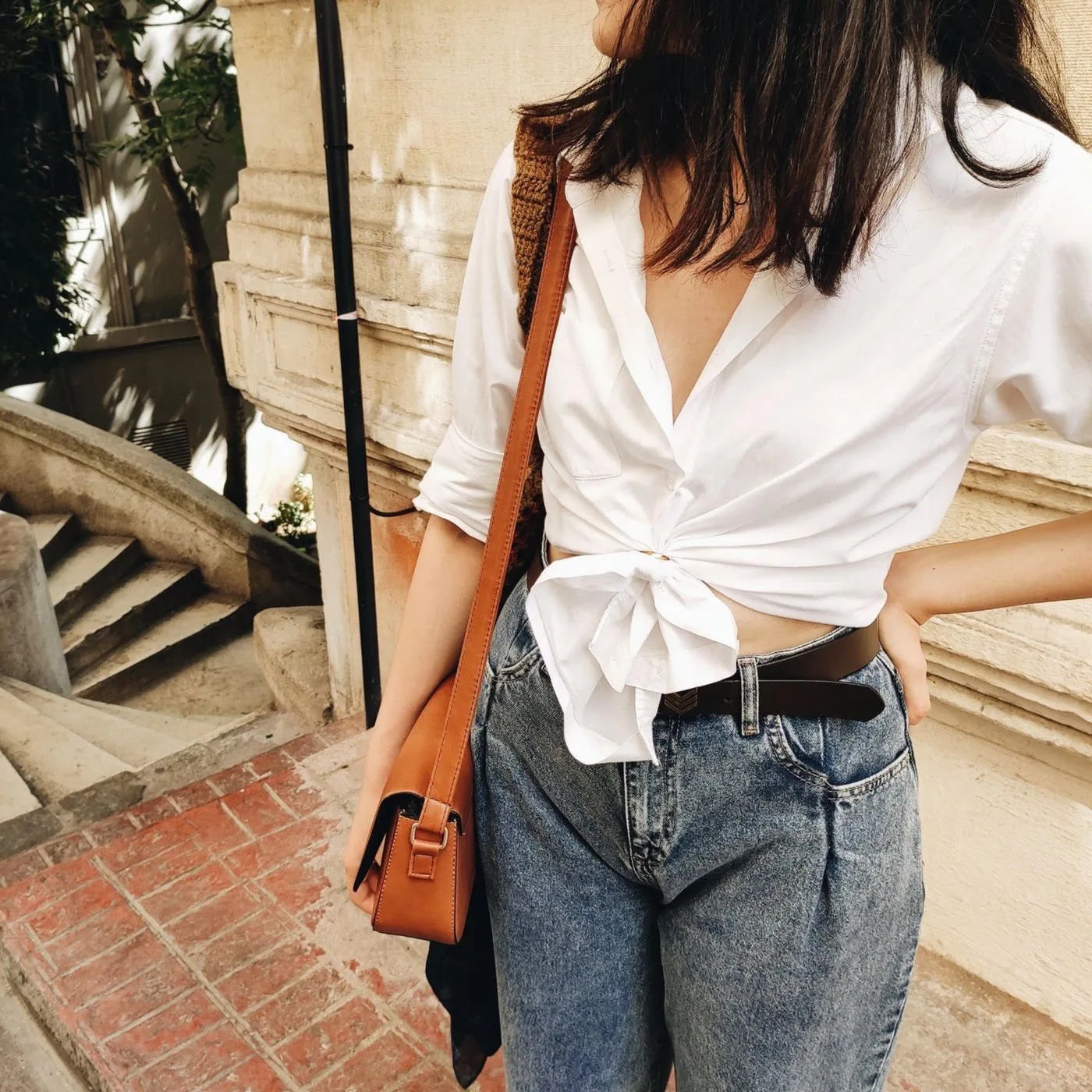
Define the shirt's role first
A white shirt can be a work layer, a relaxed weekend top, or something worn beneath a knit. Those roles need different details. A crisp collar may be useful for a meeting, while a softer open shape can feel easier for a warm afternoon. Before browsing, identify which role is missing and what you will wear with the shirt. A general idea of timelessness is not enough to decide whether a particular piece fits your routine.
Choose a comfortable shirt you already own as a measurement reference, even if it is another color. Note its shoulder placement, body length, sleeve length, and how much room it gives when seated. These details help you compare a listing's fit description. A white shirt that is technically your usual size can still feel wrong if the cut is much narrower or longer than the shape you actually enjoy.
Check opacity in ordinary daylight
Store lighting and styled images can make fabric look different from what you see by a window. Try the shirt in daylight with the underlayer you intend to use. Look at the front, back, and side, and check whether seams, pockets, or doubled fabric create visible contrast. Some transparency may be perfectly acceptable to you, but it should be a choice rather than a surprise.
Do not assume a thicker fabric is always more useful. It may offer coverage while feeling too warm or stiff for the intended job. Conversely, a lighter cloth may work beautifully as an open layer but not as a standalone top. If the retailer provides opacity information, use it as part of the assessment. The UNIQLO rayon blouse listing, for example, distinguishes its white color from others in its sheerness note, showing why color-specific details can matter.
Test the button area and the sleeves
Button a shirt as you intend to wear it, then sit, reach forward, and lift your arms. Check for pulling between buttons and whether the collar or shoulder becomes restrictive. A larger size can add room but may also change sleeve and body proportions. Another cut may solve the problem better than simply sizing up. The point is a comfortable fit, not loyalty to a number on the tag.
If you usually roll sleeves, try the roll and see whether it stays comfortably in place. If you wear the shirt under a jacket, check the cuff and armhole with the jacket too. A shirt that looks easy on its own can bunch beneath another layer. For a tucked version, sit and stand several times to see whether you are constantly rearranging the fabric. For an untucked version, inspect length with the bottoms you actually plan to wear.
Read composition and care as purchase criteria
J.Crew's official shirts and tops collection and UNIQLO's linen collection offer different fabric and silhouette directions. They are places to compare, not evidence that all white shirts behave alike. Read the composition, washing instructions, and any color-specific details on the individual item. Linen, cotton, rayon, and blends can vary in drape and care; a fiber label alone does not tell you how a garment will feel.
Ask how often you are willing to press or otherwise maintain the shirt. If a crisp finish matters to you but you dislike pressing, choose accordingly rather than imagining a future routine you will not follow. If you enjoy a more relaxed surface, you may prefer another construction. Include cleaning and any necessary alteration in the total budget. Check current return terms before trying an unfamiliar fabric online.
Make the wardrobe connection before paying
Build two outfits using your existing bottoms and shoes. One might be a work combination with trousers and another a weekend version with jeans. If both are comfortable, the shirt has a clearer role. If neither works without additional purchases, reconsider whether the white-shirt gap was real or simply an image you liked. There is no requirement that every wardrobe include the same classic items.
When the shirt arrives, complete the daylight and movement checks before removing tags or washing it. Follow the retailer's fitting and return rules while doing so. Once you keep it, follow its own care label rather than applying a generic white-shirt routine. A useful shirt is one whose opacity, fit, and maintenance match your day. The fact that it photographs neatly folded on a shelf should be the least important part of the decision.
Use the outfit, not the hanger, as the test
A folded shirt or fabric held against a hand does not show every issue you may see while wearing it. Try the shirt with its intended underlayer, trousers or skirt, and outer layer. Examine the result in daylight while seated and moving. Check whether the pocket outline, seams, or fastenings create contrast you did not notice on the hanger.
What if you like the fabric but only as an open layer? That can still be a useful role if it fits your wardrobe. Evaluate it honestly for that purpose rather than keeping it as a supposedly versatile standalone shirt. If you specifically need a work top worn closed, continue looking for the right opacity and fit. One garment does not need to serve every imagined white-shirt outfit to be worth owning, but it should serve the role you bought it for.
Options to consider
Use these retailer collections as starting points. Check the current product description, sizing, delivery and return terms before ordering; availability and prices can change.
Sources & further reading
Official information checked October 8, 2026. This guide presents research-based editorial advice, not a claim of hands-on product testing.
- J.Crew shirts and tops — official destination
- UNIQLO linen clothing — official destination
- UNIQLO rayon blouse: materials and color-specific sheerness
Illustrative stock photograph by Hümeyra Kalkan: photo source. This scene does not identify our author or establish a product test.